
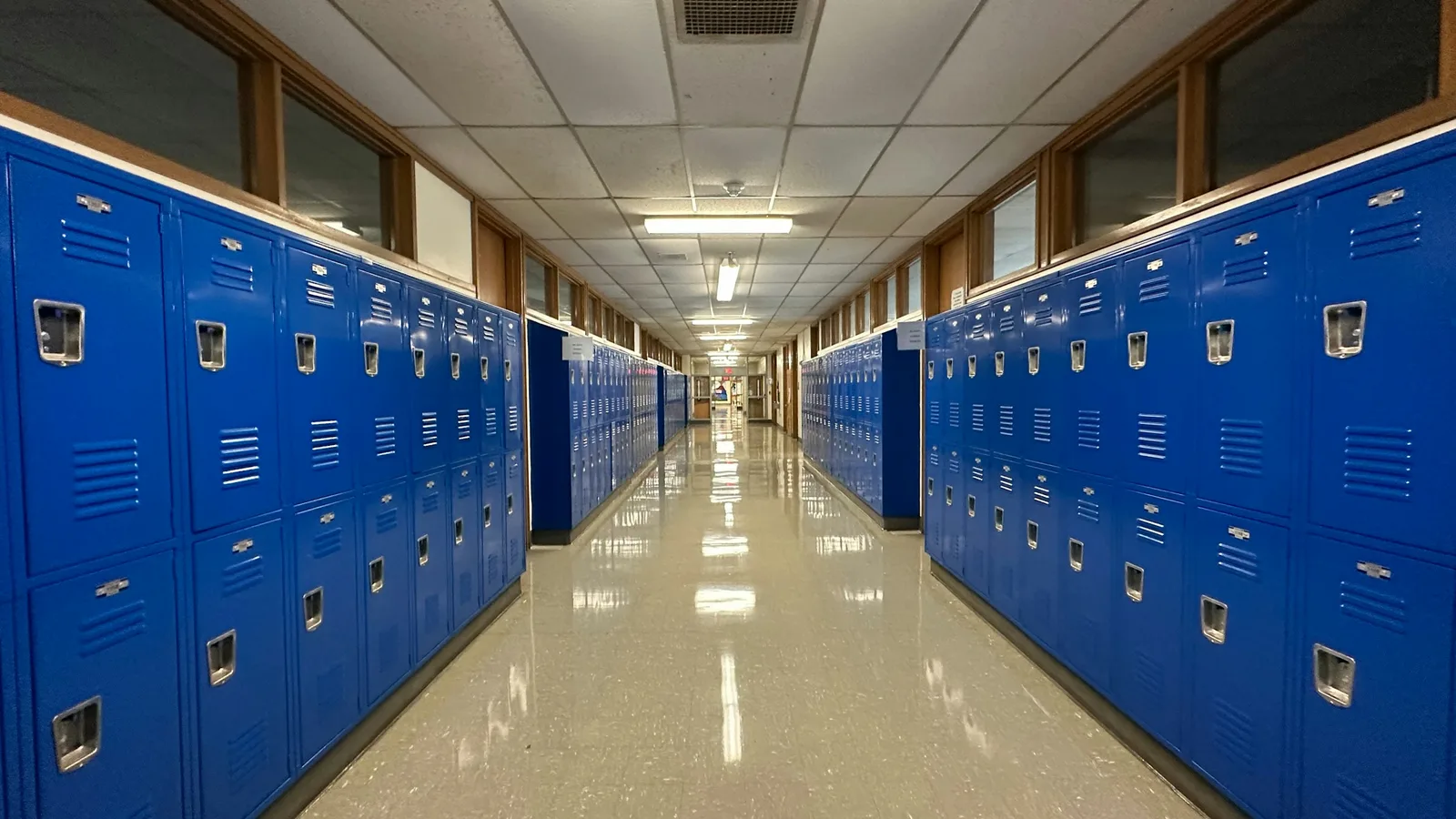
A school district runs an enterprise technology estate on a budget and a headcount that would embarrass a mid-sized company. Wireless in every classroom, thousands of devices in the hands of people who did not choose them, student information systems holding sensitive records, cameras, phones, bells, and a network that has to work at 8am whatever happened overnight.
The team responsible is frequently small enough to fit around one table. That single fact shapes almost every technology decision a district makes, including how it buys.
What makes a district different as a technology buyer
Four things, and they compound.
The team is small and fully committed. The people who would run a modernization project are the same people who reset passwords, chase a failed switch, and get a classroom working before second period. A district rarely has spare capacity waiting for a project; it has capacity that must be taken from somewhere else.
Purchases go to a board. Above a threshold, a technology purchase is approved in public by elected trustees, on an agenda published in advance, at a meeting held monthly. That is not an obstacle, but it is a hard date, and it means a decision made in the wrong week costs a month.
Money arrives with strings and deadlines. General funds, bond proceeds, grants, and federal or state programs all carry different rules about what they may be spent on and by when. A project that is technically identical may be straightforward under one source and impossible under another.
The work has to fit the calendar. Which deserves its own section.
The calendar is the constraint
Very little disruptive infrastructure work can happen while school is in session. That pushes cabling, core network replacement, large migrations, and anything requiring extended downtime into a small number of weeks in the summer, with shorter windows at winter and spring breaks.
Working backwards from a summer window is unforgiving. Equipment has to be ordered in time to arrive, which means the purchase order has to be issued in time to order, which means board approval has to happen at a meeting that falls before that, which means the requirement has to be scoped and quoted before the agenda closes. Districts that start this in April are not choosing to be late; they have usually just followed the sequence forwards instead of backwards.
This is the single strongest practical argument for cooperative purchasing in a district. Removing a solicitation from the front of that chain can be the difference between the work happening this summer and next.
What districts typically buy
The range is wide, and most of it is unglamorous.
Network and infrastructure. Wireless coverage that holds up when every student connects at once, switching that is still supported, cabling to buildings added since the last refresh, and the resilience to survive a single failure. Often the largest single line and almost always summer work. LABUSA has carried out this kind of work for a multi-campus private school system, where the district team executed a plan designed with outside help.
Cloud services and migration. Moving systems that were on servers in a closet to services someone else maintains, which for a small team is usually about reducing the number of things that can break rather than about cost.
Device and systems management. Deployment, imaging, patching, and the lifecycle of very large numbers of student devices. Districts are often managing more endpoints per administrator than any commercial organization would accept.
Communications and records. Phones, notification systems, and the secure movement of student records between campuses, agencies, and healthcare providers. That last is a real area of district work, and one LABUSA has supported for school districts in Texas.
Modernization projects. Replacing a system that has become a liability, usually because it is unsupported, unsupportable, or the only person who understood it has retired.
Project management. Someone to run the initiative who is not also carrying a help desk queue. Frequently the cheapest thing a district can buy and the most commonly omitted.
Supplemental technical staff. Experienced people working alongside the district team for a defined period, either to deliver a project or to cover a gap. The model has particular characteristics in a school setting, which we cover separately in IT staff augmentation for school districts.
Cybersecurity. Assessment, remediation, and the governance around them. Districts hold a great deal of sensitive information about minors and are obliged to protect it, and the work involved is a program rather than a purchase. We cover it in cybersecurity services for school districts.
Where cooperative purchasing helps
Cooperative contracts help a district most where the requirement is clear and the calendar is tight. They remove the solicitation, which is the longest and least predictable step, and they let a small team spend its limited procurement effort on the purchases that genuinely need a bespoke process.
They help less than people expect in three situations, and it is worth being straightforward about them.
- When the requirement is not yet clear. Removing the solicitation does not remove the need to know what you are buying. A district that cannot describe the outcome will get quotes that are not comparable, whatever the vehicle.
- When the value is above the board threshold. The item still goes to the board. Cooperative purchasing shortens the front of the process, not the middle.
- When the funding source has its own rules. Some programs impose competitive requirements or eligible-cost definitions that sit on top of everything else. Check the funding source before you check the contract.
Who needs to be in the room
District technology purchases go wrong for organizational reasons more often than technical ones, and usually because one of three people was brought in too late.
The business office. They know which funding source can pay for this, what the approval threshold is, when the board agenda closes, and whether the district's policy permits cooperative purchasing at this value. Involving them at the quote stage rather than the approval stage routinely saves a month, because the answer to "can we pay for it this way" changes what you should be scoping.
Whoever will operate it afterwards. If the district team will run the system once the supplier leaves, they should have seen the design before it was agreed. Systems handed over to people who first encountered them at handover are the ones that get quietly replaced two years later.
Campus staff. Not for the technical decision, but for the constraints. A summer window that assumes empty buildings collides with summer school, athletics, facilities work, and the cleaning schedule. Campus principals and facilities managers know that calendar in a way the central office does not.
None of this requires a committee. It requires three short conversations before the scope is finalized rather than after.
What a district still has to do
Everything that is not the solicitation. Confirm the district is a current member, which is checked against the cooperative's own records at tips-usa.com rather than with a supplier, confirm that district policy permits cooperative purchasing at this value, define the requirement, obtain a quote, take it through approval, and issue purchasing documentation that references the contract. The general sequence, which is not specific to education, is set out in our guide to purchasing IT services through a cooperative contract.
The district-specific addition is the calendar. Put the board meeting dates and the summer window on the plan first, then work backwards. Every other date follows from those two.
Starting with a defined requirement
The most useful thing a district technology director can do before approaching anyone is to write down the outcome in a paragraph a trustee would understand, the date it has to be finished by and why, what already exists, and what the district will do itself.
That paragraph does more work than it appears to. It makes quotes comparable. It gives the board something to approve that is not a list of part numbers. It tells a supplier which of the four engagement models you are actually asking for. And when the project is running and somebody asks whether it is going well, it is the thing you measure against.
LABUSA holds an awarded TIPS contract covering IT consulting and related services, and districts that are eligible TIPS members can purchase IT services through TIPS Contract 230601, subject to their own purchasing policies and approval requirements. If you have a summer window in mind, the useful time to have the scoping conversation is considerably earlier than feels necessary.