
Cloud Computing

Microsoft Azure Managed Services
Azure arrives in most organizations through a side door. A directory already exists because of a productivity suite, a licence bundle includes credit, and a first workload lands without any of the structural decisions be...
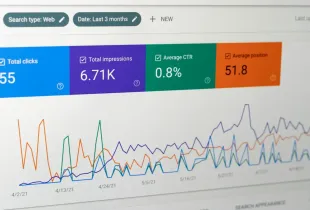
Infrastructure Monitoring and Management
Most organizations have monitoring. Rather fewer have monitoring that would tell them, promptly and to the right person, that something a user cares about has stopped working. The gap between those two states is not usua...

Server and Operating System Management
Operating system management is the work nobody puts on a roadmap. It produces no new capability, it is invisible when it goes well, and every individual deferral is defensible. It is also the discipline whose absence is ...

Network Infrastructure Management
The network is the dependency every other system has and the one least likely to have a current diagram. It is also where a small change has the widest reach, which is why network work attracts both the most caution and ...

Backup and Data Protection
Almost every organization has backups. A smaller number have restores. The distinction matters because backup software reports on the job it ran, not on whether the data it wrote can be turned back into a working system,...

Disaster Recovery and Business Continuity
Disaster recovery restores technology. Business continuity keeps the organization functioning while the technology is unavailable. Organizations often build the first, call it the second, and discover the gap during an i...

High Availability and Load Balancing
Redundancy is a property of a design. Availability is what a visitor experiences. The layer that converts one into the other is the load balancer, and most availability failures in otherwise well-designed estates happen ...

Designing Infrastructure for High Availability
Availability is designed before it is operated. The mechanics of distributing traffic and removing failed components are covered in High Availability and Load Balancing; this page is about the decisions made earlier, whi...

Private Cloud, Public Cloud and Hybrid Cloud
The three deployment models are usually compared on price, which is the dimension where the comparison is least reliable. What actually differs is who operates the platform, where the data sits, how quickly capacity can ...

Hybrid Cloud Architecture Explained
Hybrid architecture is the design of the seam between two environments. Most of the difficulty is there rather than in either environment individually, because each is well understood on its own and the interface between...