Managed Cloud & Infrastructure Services
Design, modernize, manage and protect the infrastructure your organization depends on. LABUSA operates private, public and hybrid environments as a continuing service rather than a project that ends at go-live.
Private cloud, AWS, Microsoft Azure, hybrid architecture, data center, migration, monitoring, high availability and disaster recovery. Where the applications running on that infrastructure need work of their own, that is Application Management & Support; where the security operations do, that is Managed Cybersecurity Services.
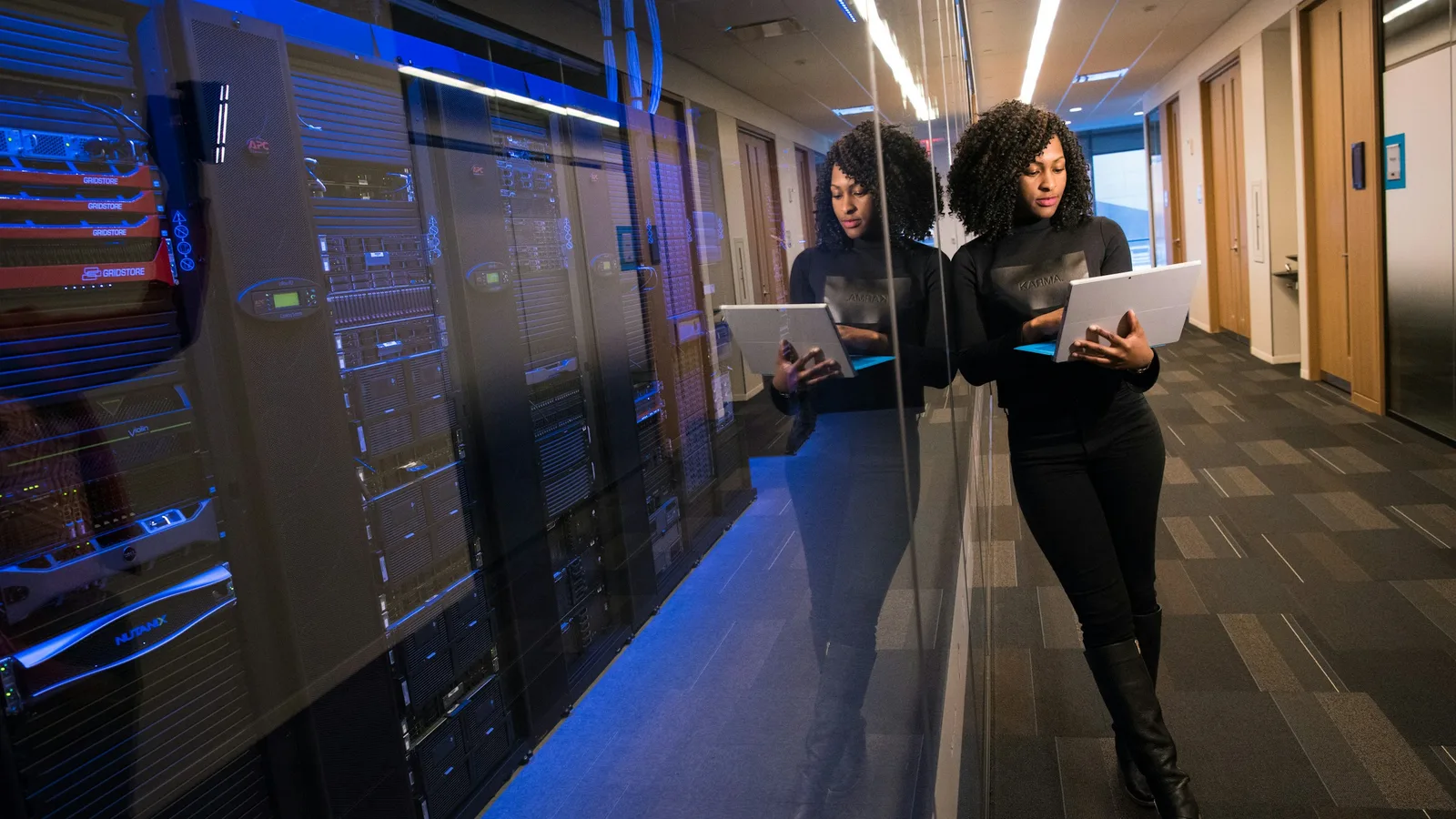
Why infrastructure drifts
Infrastructure is usually designed carefully once and then operated by whoever has time. The design assumptions survive in a document; the environment moves on without them.
- Capacity is sized for the launch, not the third year. Growth is absorbed quietly until something is suddenly the constraint, and by then the cheap fix has passed.
- Operating systems fall behind their support window. Patching is nobody's whole job and every deferral is individually reasonable.
- Monitoring watches what was easy to instrument. Not what would actually indicate the service is failing for a user.
- Backups run; restores are untested. The first genuine test of a recovery procedure should not be an outage.
- Redundancy is assumed rather than proved. A second node is not high availability until something has been shown to fail over.
- Cloud spend grows faster than the workload. Nothing in a cloud bill removes a resource nobody is using.
None of this is negligence. It is what happens when infrastructure has an owner for projects and no owner for the years in between. A managed service is worth buying at the point where the honest answer is that this work will not otherwise be done consistently.
Assess
Establish what exists: workloads, dependencies, operating systems, network paths, data, licensing and the constraints that are actually binding.
Architect
Decide where each workload belongs and why, against security, compliance, availability, performance and cost requirements rather than a platform preference.
Migrate
Move workloads in planned waves with testing and a defined rollback, rather than a single cutover with no way back.
Secure
Build the controls into the environment as it is created, and coordinate with the security operations that run alongside it.
Operate
Patch, configure, manage capacity and hold the environment to the design it was given, with exceptions recorded rather than accumulated.
Monitor
Watch availability, capacity and performance against what a user would notice, with escalation agreed in advance.
Optimize
Right-size, retire what is idle and revisit the architecture as the workload changes rather than only when the bill does.
Recover
Back up, replicate, and prove the recovery works by exercising it, against recovery objectives the business has actually agreed.
Private cloud and data center
Compute, storage, networking and virtualization in a managed private environment, with redundancy and monitoring operated as part of the service. Private Cloud and Data Center Services
Public cloud
AWS and Microsoft Azure environments built, operated and maintained rather than merely provisioned. AWS Managed Services and Microsoft Azure Managed Services
Hybrid infrastructure
Private and public environments operated as one architecture, with workload placement decided on requirements rather than habit. Hybrid Cloud Infrastructure
Migration and modernization
Assessment, wave planning, data migration, testing, cutover and the operational transition afterwards. Cloud Migration and Modernization
Monitoring and management
Infrastructure health, capacity, availability, logging and alerting, with a defined route from a signal to a person. Infrastructure Monitoring and Management
Server and operating system management
Linux, Ubuntu and Windows patching, configuration, hardening and lifecycle. Server and Operating System Management
Network infrastructure
Routing, switching, segmentation, connectivity, load balancing and DNS across private and hybrid environments. Network Infrastructure Management
Backup, recovery and continuity
Backup strategy and retention, disaster recovery architecture and the recovery exercises that prove either one works. Backup and Data Protection and Disaster Recovery and Business Continuity
Delivery, security and resilience
LABUSA's implementation approach is to define the security and data boundary before selecting the technology that crosses it. What data, systems, users and workloads may cross an environment boundary, and under what controls, is a question with an answer that survives a platform change; a platform chosen first tends to decide it by accident.
Security is part of operating the infrastructure, not a layer on top
Identity, segmentation, logging, patching and configuration baselines are infrastructure work and security work at the same time. LABUSA operates them as one job, and the security operations that sit alongside them (monitoring, vulnerability management, incident response) are covered under Managed Cybersecurity Services rather than restated here.
Responsibility in a cloud environment is shared between provider and customer, and the split differs by service model. Getting that boundary wrong is one of the more common ways a well-run environment ends up with an unowned gap. Cloud Security and Shared Responsibility sets out where the line falls.
Resilience is a property you test, not one you buy
High availability, backup, disaster recovery and business continuity are four different disciplines that are frequently treated as one. A backup is not a recovery plan, a second server is not high availability, and a recovery objective nobody has exercised is an aspiration. LABUSA plans each against the requirement the business has actually stated, and then exercises it.
Recovery objectives are the part most often left implicit. NIST defines a recovery time objective as the maximum time a system can be unavailable before the impact is unacceptable, and a recovery point objective as the point in time to which data must be recovered after an outage. Those two numbers determine the architecture and most of its cost, which is why they are agreed before the design rather than discovered during an incident.
Privately hosted infrastructure
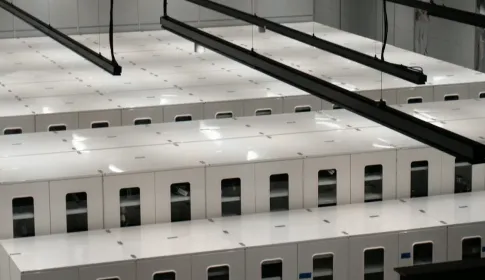
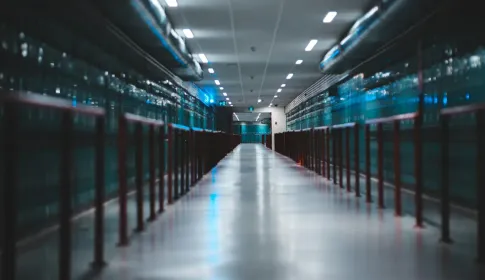
LABUSA operates privately hosted infrastructure from a data center facility in the Houston, Texas area. The environment supports LABUSA-managed hosting, SaaS, security and hybrid-cloud services.
Hybrid across private, AWS and Azure
LABUSA operates hybrid infrastructure combining privately hosted infrastructure with AWS, AWS GovCloud (US) and Microsoft Azure services, using AWS services including Route 53, EC2, S3, VPC and IAM, and Azure services including Azure Front Door.
Disaster recovery in practice
LABUSA uses AWS as part of its disaster recovery architecture to support failover of designated websites and web applications from LABUSA-managed private infrastructure.
Hybrid architecture experience
LABUSA has designed and configured hybrid web architectures that use AWS for production workload delivery and additional capacity alongside privately hosted infrastructure.
A professionally managed facility
LABUSA's privately hosted infrastructure operates from a professionally managed data center facility that undergoes annual SSAE 18 SOC 2 Type II examination covering applicable security, availability and confidentiality controls. The examination applies to the facility, not to LABUSA.
Texas public-sector readiness
LABUSA holds TX-RAMP authorization TX1287136 for its cloud services, and works with Texas agencies and institutions through state and cooperative purchasing channels. TX-RAMP-Certified Cloud Solutions
Start here
The lifecycle in full, and what a managed cloud service actually includes. The Managed Cloud and Infrastructure Lifecycle and What Are Managed Cloud Services?
Choosing a model
Where a workload belongs, and why. Private Cloud, Public Cloud and Hybrid Cloud and Hybrid Cloud Architecture Explained
Managed Cybersecurity Services
The security operations that run alongside infrastructure: monitoring, vulnerability management, incident response. See Managed Cybersecurity Services
Enterprise Drupal Modernization
Where the workload being modernized is a Drupal estate, the platform layer is this service and the application layer is that one. See Enterprise Drupal Modernization
AI Infrastructure
AI workloads make their own demands on compute, storage and networking. See AI Infrastructure and Private Enterprise AI
Virtual CIO
Where infrastructure decisions belong to a wider technology strategy, budget and lifecycle plan. Virtual CIO & Technology Leadership
Buying through TIPS
Data center hosting and colocation through a cooperative contract. TIPS 260302 Data Center
Talk to LABUSA
Discuss your infrastructure environment
Tell us what you are running today and where it hurts. We will tell you what it would take to operate it properly, and what we would not change.
Discuss your infrastructure environmentReferenced Articles


Is your business vulnerable to cyber threats? Forty-three percent of businesses have compliance gaps in cloud-based payment systems, making them prime targets for cyberattacks.