
All Resources

Infrastructure is designed once and operated for years. A guide to the eight stages that work actually runs on, and what happens at each when nobody owns it.

Managed cloud is the ongoing operation of an environment, not the act of moving into one. What the service covers, what it does not, and when buying it is the right call.

Assess, discover, architect, plan, migrate, validate, optimize, operate. How a migration is sequenced so that a bad wave is a delay rather than an outage.

Two numbers decide the architecture and most of its cost. What RTO and RPO mean, who owns them, how they map to recovery patterns, and how to test them.
Most organizations run hybrid whether they planned to or not. What makes it an architecture rather than an accident, and what has to be operated as one thing.

Compute, storage, networking and virtualization in a managed private environment. What private cloud actually provides, what it costs, and when it is the right place.

Running an AWS environment properly is a different job from opening an account. Account structure, networking, identity, resilience, cost and the operating rhythm.

Subscriptions, identity, networking, availability zones and cost. What a managed Azure environment involves, and where its shared responsibility line falls.
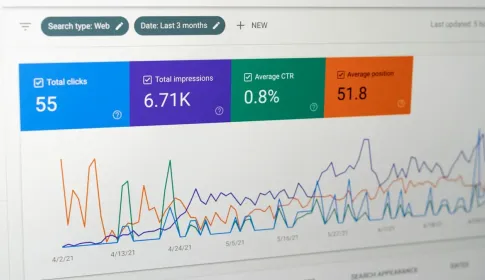
Monitoring earns its cost by shortening the distance between a failure and somebody competent knowing. What to instrument, what to alert on, and what to ignore.

Patching, configuration, hardening and lifecycle across Linux and Windows. The least glamorous infrastructure discipline, and the one that decays first.

Routing, switching, segmentation, connectivity, load balancing and DNS. The layer everything else depends on and the one least often documented.

Backup is judged on restores, not on backups. What to protect, how often, where copies live, how long they are kept, and how the restore gets tested.

Technical recovery restores systems. Continuity keeps the organization functioning while that happens. The two are related, frequently confused, and need different plans.

The traffic layer: load balancer types, health checks that mean something, session handling, TLS termination, draining and the failover capacity nobody sizes for.
Failure domains, correlated failure, N+1 against 2N, degradation modes and the dependency analysis that decides whether redundancy will actually help.

A comparison that starts from the definitions rather than the marketing: what each model changes about cost, control, elasticity, data location and operational effort.

The architecture of joining two environments: connectivity, identity, data placement, integration patterns and the boundary decisions that determine whether it works.
What a migration strategy document has to contain to be usable: the objective, the principles, the disposition of every system, the sequence, the budget and the governance.

The provider secures the cloud. You secure what you put in it. Where that line falls by service model, and which controls stay yours whatever the console suggests.

Cloud cost is an engineering output, not a procurement input. Visibility, allocation, rightsizing, commitment and the practice that keeps the work from being a one-off.

What differs for agencies, districts and public institutions: authorization programs, data location, procurement, records obligations and legacy systems that cannot move.

Security is not a project that finishes. A working guide to the six things a security program has to keep doing, why controls decay between them, and how the cycle is actually run.
Managed cybersecurity is the continuing operation of security controls, not a product you install. What the service covers, what it does not, and when buying one is the right answer.

How a cybersecurity risk assessment is actually conducted: assets, threats, vulnerabilities, existing controls, likelihood and impact, and what has to happen after the report lands.
Discover, assess, prioritize, remediate, validate, monitor. How the vulnerability lifecycle is actually run, why backlogs grow, and what separates a scan from a program.
Logging, detection, triage and escalation. What has to be collected, who looks at it, and why most monitoring failures are staffing and process problems rather than tooling gaps.

Prepare, detect, analyze, contain, eradicate, recover, improve. What each stage requires, which decisions must be settled in advance, and why the lessons learned stage is the one that pays.
Baselines for operating systems, servers, cloud, network devices, applications and databases. How configuration drift happens, and what it takes to detect and correct it.

Least privilege, multifactor authentication, privileged accounts, joiners and leavers, access reviews and service accounts. Where identity controls decay and what keeps them working.
Firewalls, segmentation, secure remote access, intrusion detection and the zero trust concepts that changed what a network boundary is for. What still works and what no longer does.
Workstations, laptops, servers and mobile devices. Detection and response tooling, patching, configuration, telemetry and the administrative controls that decide how far an intrusion travels.
Public, private and hybrid environments. Shared responsibility, identity, network controls, encryption, logging and the configuration mistakes that cause most cloud incidents.

Phishing, account compromise, sender authentication, malicious links and attachments, and the collaboration platform settings that decide how far a compromised mailbox reaches.
Why backup alone is not resilience. Immutability, recovery objectives, restoration testing, ransomware considerations and the difference between having copies and being able to recover.
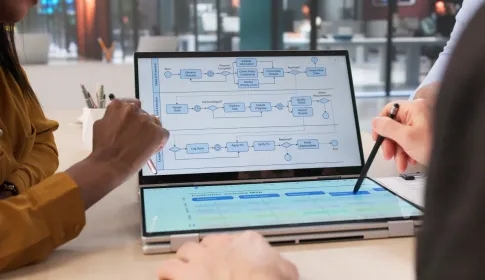
A prioritized set of safeguards that answers the question frameworks usually leave open: what to do first. How the implementation groups work and where the controls fit alongside NIST and ISO.

Policies, standards, procedures, inventories, diagrams, risk registers and control evidence. What documentation a security program actually needs and how it stays current.

The difference between passing an assessment and maintaining an effective program. Continuous evidence collection, control validation, remediation tracking and reporting.

The six functions, what the framework is for, and what it is not. How organizations use it to structure cybersecurity risk management without treating it as a certification.

A control catalog, not a checklist. How the families, baselines and tailoring work, why no organization implements every control, and where 800-53 fits alongside other frameworks.

What an information security management system is, how risk based security management works under ISO/IEC 27001, and the difference between certifying and aligning.

Government, healthcare and education environments carry obligations that are continuous rather than periodic. What managed security can do for them, and what stays with the organization.

Moving a large Drupal estate off a proprietary platform is an operating model decision, not a hosting change. What has to be designed, automated, secured and operated, and in what order.
DevSecOps means security checks run inside the delivery pipeline rather than beside it. What that means for a Drupal codebase specifically, and what it does not mean.
A managed Drupal platform and a cloud account you control solve the same problem with different trade-offs. What each is genuinely better at, and the questions that actually decide it.

All three can build, test and deploy Drupal. What separates them is approvals, environments, artifact handling and how they behave across an estate rather than a repository.

A staged method for moving Drupal off a managed platform: what to inventory, what to build before you move anything, how to sequence, and how to keep rollback available.
Stage by stage: what runs on the pull request, what builds the artifact, which security gates block a release, and how the Drupal deployment sequence fits after the files land.
Azure DevOps can run delivery for Drupal workloads that live in AWS or private infrastructure. How repos, pipelines, environments and approvals map onto a Drupal estate.
What belongs in Infrastructure as Code for a Drupal estate, how to structure it across many sites, and why state is the part that needs a custody decision before the first apply.

Create, clone, deploy, update, back up, restore, retire. The operations a Drupal estate performs constantly, why the deploy sequence order matters, and how to run them across many sites.

Migrating forty sites as forty projects costs forty times as much and teaches nothing. A factory builds the repeatable path first, so the second site is cheaper than the first.
Layer by layer, in the order a request travels: edge, load balancing, runtime, environments, data services, security, observability, recovery and automation. What each decides.
A cutover is a sequence, not an event. The steps in order, why rollback in Drupal is harder than redeploying, and how to keep going back available until acceptance.
What has to be protected beyond the database, how to set recovery objectives using the NIST definitions, and why a backup that has never been restored is a hypothesis.

What running an enterprise Drupal platform actually involves after go live: patching, monitoring, incident response, capacity, backup rehearsal, release support and reporting.
A proprietary platform is a bundle of operational capabilities, not a hosting product. The ten rows that need a named replacement before the first production site moves.
Healthy servers and an unusable site is an ordinary combination. What to measure at the Drupal layer, how the signals fit together, and how to alert without training people to ignore it.

A managed platform let developers act without asking. Replacing that with a ticket queue makes the new platform feel slower than the old one. How to expose approved automation safely.
The controls a Drupal platform needs once the managed platform is no longer supplying them: edge, identity, secrets, segmentation, hardening, logging and supply chain.
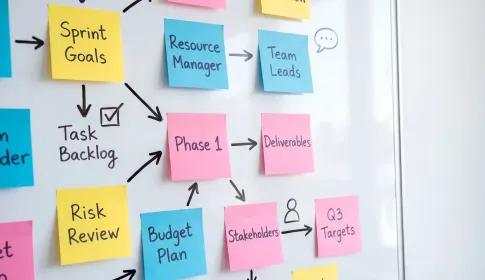
A wave model is a shape, not a schedule. How to group sites so each wave teaches the next, what belongs in wave zero, and the sequencing mistakes that cost the most.
The factors to score before planning an estate migration, how to turn them into a complexity matrix, and what that matrix should decide. A checklist you can run yourself.

AI infrastructure is the compute, storage, networking, serving and operations layer that production AI runs on. What it includes, and how it differs from a model, a platform and an application.
A reference architecture for enterprise AI: the layers a request passes through, what each one owns, the cross cutting concerns, and the decisions that vary by organization.

Most organizations end up running AI across more than one environment. What hybrid actually means, the four patterns that recur, and the data flow and latency questions that decide whether it works.

Many enterprise AI deployments need no accelerators at all. When a CPU is enough, when a hosted endpoint removes the question, and the four conditions that genuinely justify buying your own.

Designing and operating accelerator capacity for production AI: memory as the binding constraint, sharing and scheduling, utilization, power and cooling, and the lifecycle nobody budgets for.

Inference infrastructure answers requests against a model that already exists. Loading, memory, batching, concurrency, autoscaling and the latency behavior that makes it unlike web serving.
How model endpoints are structured in production: model servers, versioning and rollback, routing, health checking, multi model environments and the observability that makes changes safe.
Why AI workloads are containerized, what containers do and do not isolate, the image size and GPU access problems specific to AI, and the security boundary NIST is explicit about.
How Kubernetes schedules accelerators, why GPU requests behave unlike CPU, what autoscaling does and does not solve for inference, and when an orchestrator is more machinery than you need.
An AI gateway centralizes access to models: authentication, routing, rate limiting, logging and cost attribution. What it does, how it differs from an API gateway, and when it earns its place.
Redundant model endpoints, health checking, graceful degradation, fallback models and multi zone design, and why availability targets for AI have to be set against a workload that recovers slowly.
Not every part of an AI environment is backed up the same way. What is restored, what is rebuilt, what is regenerated, and how RTO and RPO apply to a system with a large derived data set.
How to size an AI environment from measured demand: the right unit of capacity, why request counts mislead, the inputs that matter, and why a formula alone will not produce a defensible number.
Segmenting an AI environment: what should reach what, ingress and egress control, private endpoints, administrative interfaces, and why location based trust is the wrong model.
API keys, model credentials, database passwords and service identities in an AI environment: where they accumulate, why rotation is hard, workload identity, and keeping them out of logs.
Private enterprise AI means keeping control of the data, identities, connected systems and audit record around an AI environment. It is a description of control, not a product or a place.

Public and private AI are not a straight choice between convenience and safety. The decision is about which risks you would rather carry, and it differs by the kind of material involved.
Where an AI environment runs is not a choice between two options but six, and the axis that decides most cases is operational responsibility rather than data control.

Most private AI projects begin with a model and reach the questions about data and identity late, when the answers are expensive. This is the order that avoids that.
Retrieval augmented generation closes the gap between a general model and your organization at the moment of the question, rather than by changing the model. What that takes in practice.
A retrieval system returns prose that has already been assembled, so by the time an answer exists any disclosure has happened. What has to be true at each stage of the pipeline.

Retrieval supplies knowledge; fine tuning shapes behavior. Most enterprise requirements are knowledge problems, and reaching for fine tuning there is the expensive mistake.
Private LLM describes at least five different arrangements with different guarantees. Five direct questions distinguish them without anyone having to agree on the terminology.
Most models described as open source are open weights, which is a different and weaker claim. What the terms mean, why it matters commercially, and how to check rather than assume.
Organizations expect this decision to be about performance. For most enterprise workloads it is about permissions, lifecycle and where the data sits.
Generative AI arrives whether or not anyone approves it, so the useful question is rarely whether to allow it but how to make the approved path better than the unapproved one.
An AI system is a new set of paths in and out of your information. Several of them do not look like data transfers to the people using them, which is most of the problem.
An AI system must not become a way around the authorization model you already have. That is violated routinely, and usually not by anyone deciding to violate it.
An AI environment is a set of APIs, and most of what goes wrong there is not novel. It is the ordinary API failure set arriving where teams are thinking about models.
Every argument for logging an AI system is an argument for collecting the most sensitive material in the organization into one searchable place. Both halves are true.

Residency is a question about geography. Sovereignty is a question about jurisdiction. An AI deployment can satisfy one and fail the other, and the chain here is longer than most.

An agent is a system permitted to act rather than only to answer. Everything else is a variation on that one change, and it is what makes the security question different.
Compare hosting options by what each makes your responsibility rather than by how private each sounds. The deciding question is who operates it in eighteen months.
What a readiness assessment actually hands over: the deliverable set, who owns it, what you may do with it afterwards, and what has to be true before you accept it.

How to tell whether an AI readiness assessment was worth commissioning: what to measure, what good looks like, when to check, and the measures that quietly mislead.
AI governance is how an organization decides what AI it adopts, who owns each system, what data goes in, who reviews the output, and what happens when something goes wrong.
Fourteen domains an AI governance program has to cover, what each one contains, and how to read the framework as a gap list rather than a project plan.
The order to build an AI governance program in, and why the order matters more than the list. Ten steps, and what the first ninety days realistically produce.

What belongs in an AI inventory, how to run the first one without driving adoption underground, and how to keep it true once the initial sweep is over.

How to run an AI risk assessment: assess use cases rather than systems, ten dimensions, a three-tier model, and who is entitled to accept what remains.
What to ask an AI supplier, what to look for in the agreement, and how to review AI capability that arrived inside software you already own.

Fifty-seven checkable statements across fifteen areas, answered yes or no, to establish where an AI governance program actually stands and what to do first.
What the NIST AI Risk Management Framework is, its four functions, the Generative AI Profile, what it is not, and how to use it without adopting it wholesale.
Voluntary risk guidance versus a certifiable management system. What each instrument is for, how they work together, and language that stays accurate.

Prompts, retrieved context, embeddings, logs and outputs are data your privacy program probably does not map. What to rule on first, and where the data goes.

What generative AI adds to a governance program: confabulation, disclosure, intellectual property, prompt injection, and separate approval for the ability to act.

The twelve decisions an AI acceptable use policy has to make, why it should be a page, and the two sentences that do more work than the rest of the document.

Governing AI in a school district: the inventory, a data rule about student information, approved tools, student use, vendors and what to tell families.

The documents a governance engagement hands over, who owns them, what makes them acceptable, and what happens to them when the person who commissioned the work leaves.
Five measures that show whether AI governance is working, four that mislead, how long each takes to mature, and why the baseline has to be taken before the work starts.

Six lessons from documented government AI programmes, drawn from GAO evaluations and the UK Government AI Playbook, with what each one suggests for a public organization starting out.

Ten questions a leader can ask without technical knowledge, chosen because the answers are usually surprising, and what the pattern of answers tends to reveal.
The seven dimensions LABUSA assesses, what each one covers, why it is separate from the others, and what a weak result in it actually costs.
A working checklist across the seven readiness dimensions, built so every item has a verifiable answer, with a plain statement of what completing it does not establish.

Districts are further into AI than most public organizations and further from having decided anything. What a readiness assessment looks at in a district specifically.

Where the value is in local government, why public records is the question a vendor will not raise, and what a readiness assessment establishes before a purchase.

A governance position sized for organizations without a compliance department: an inventory, a named owner, a data rule, an approved list, and real human oversight.
Ten risks to work through before deploying AI, from the tools already in use and inherited permissions to prompt injection, missing logs and cost as an availability risk.

Administrative first, instructional last, and why that order is the argument. Where AI genuinely helps a district, and the decisions that must stay with people.

Where AI genuinely helps a city or county, ordered by how straightforward each is to do well, with a deliberately narrow public safety section and three firm boundaries.
Findings, disagreement, sequencing, the roadmap, and the three ways organizations most often waste an assessment they have just paid for.
Cooperative purchasing lets one public agency run a competitive solicitation that many others can buy from. Here is how the model works, what TIPS is, and what it does not do for you.
Buying professional services through a cooperative contract is mostly work that happens inside your own organization. Here is the sequence, from a stated requirement through to a supplier starting.
Public agencies buy IT consulting in four quite different shapes, and choosing the wrong one costs more than choosing the wrong supplier. A guide to the models, and to a decision that gets skipped.
School district technology work is shaped by the calendar, the board, and a very small central team. Here is what districts buy, and where cooperative purchasing genuinely helps.
Bringing in experienced technical people alongside a district team works well when the engagement is defined so it can end. Here is how districts use the model, and how to keep it honest.
District cybersecurity is a program built over several budget years, not a product you buy once. Here is an order of work that holds up, and how districts obtain the expertise to do it.
The rates under TIPS Contract 230601 are published as part of the award, not quoted per customer. Here are the not-to-exceed ceilings by role, the travel terms, and how to turn them into a budget.

A TIPS award tells you a competitive process happened, not that the supplier suits your project. What to ask, what to compare and what should worry you when choosing under Contract 230601.

Contract 230601 settles how you buy. It does not decide what a consultant may reach, who approved it, or how it ends. What to define, and which document each term belongs in.

A purchase order under this contract buys hours at a published ceiling. What most buyers want is a document. Nothing in the award converts one into the other, so the order has to.

Twelve months on, somebody who did not authorize the engagement will ask what it achieved. What to decide before the order is issued so that question has an answer.

The ADA title II web rule reaches content a vendor builds and hosts for you, and the obligation stays with your organization. What to require, of whom, and what evidence to accept.

Use the cooperative contract when the competition already run covers the work and your rules permit it. Run your own solicitation when either is untrue. How to tell, and what to record.

Colocation is renting space, power and cooling for equipment that stays yours. What it includes, what it is not, and the four situations where a public agency genuinely needs it.
Every workload sits on-premise, in a rack you rent, on a leased server or in public cloud. How a public agency decides which, and what the decision should leave behind.
A hosting purchase is a purchase of a place, and the equipment has to get there. What to settle before you ask for a quote, what belongs in the requirement, and how the move works.
Published monthly ceilings for dedicated hosting and colocation under TIPS Contract 260302, what actually drives the number, and how to build a budget that survives a finance office.
Buying data center space means evaluating a building, not just a supplier. What to ask about the facility, power, the uptime figure, access and connectivity, and what to compare.

A contracted percentage below the manufacturer catalog, not a fixed price. What that guarantees, what it does not, and the four checks that turn a quote into a documented price analysis.
One contract covering products, services, cybersecurity, physical security and field work. What that combination makes possible, how the two pricing models meet, and how to structure the purchase.

The hard parts of buying equipment are not in the price. What to settle first, the six things a hardware requirement must specify, and how to get quotes you can actually compare.

Forty four published hourly ceilings, and a discount off catalog for products rather than a price. What each model means for a budget, and the four things that move the number.

Choosing between two suppliers under the same contract is not a pricing exercise. What to ask about product supply, licensed installation work and field capacity, and what to compare.
A roadmap turns an agreed AI position into a sequence: dependencies first, phases built around them, budget per phase, named owners, and gates that can stop the next phase.

AI governance in a smaller organization is a handful of decisions about authority and access, not a framework. What to inventory, what to approve, and what an auditor will actually ask for.
An AI strategy is a short written position on where AI will and will not be used, what is worth spending, and what would count as success, not a list of tools. How to arrive at one.
A structured review of whether an organization can actually support AI (data, infrastructure, security, governance) and what has to change first.
A practical sequence for taking an organization from "we should be doing something with AI" to a governed deployment that produces a measurable result, and what gets decided at each step.
Virtual CIO services are sold under five different pricing models, which is why quotes are hard to compare. What each model suits, and the variables that move the number.

What a Virtual CIO engagement actually looks like inside a smaller organization: the first 90 days, the meeting cadence, and how the role divides with an existing IT provider.
A Virtual CIO and an IT consultant both bring outside expertise, but they are bought for different reasons and are accountable for different things. Here is how to tell which you need.
Which measures actually show whether an AI content platform is working, how to capture a baseline before you change anything, and the metrics that mislead.

Moving from a legacy CMS to an AI-enabled platform: what to migrate and what to leave, preserving URLs and search equity, redirect mapping, cutover, and what to verify afterwards.

How to evaluate AI content platforms once you know what you need: the criteria that actually differentiate, the questions vendors find hard, and how to run a comparison on your own content.

The ways AI content platform projects actually go wrong (content debt, unowned content, permission mismatches, drifting quality and stalled adoption), and the early warning signs.

What an AI content platform actually costs money on, which decisions move the number most, and the recurring lines that are routinely left out of the first budget.

Where an AI content platform actually earns its cost in a smaller organization, worked through realistic scenarios, and the use cases an SMB should deliberately leave alone.
The controls that keep an AI content platform from leaking: permission-aware retrieval, what leaves your boundary, prompt injection, logging, and evaluating a model provider.

How to tell whether AI-assisted content is actually good: the checks worth running, which can be automated, and how to sample quality at a scale manual review cannot reach.

Where a person genuinely has to stand in an AI content process, what makes an approval gate real rather than decorative, and how to design against rubber-stamping.
How to establish authority over AI-assisted content: named ownership, an AI usage policy people can actually apply, model and prompt governance, and evidence that any of it happened.
Managing content from planning through review, publication and expiry to archival and deletion, and where AI triggers help a large library stay current.
Using AI to assign content to a controlled vocabulary (categories, topics, document types and sensitivity labels), and how confidence thresholds keep it trustworthy.

Using AI to draft the descriptive text around content (meta descriptions, alt text, summaries and document properties), and how to keep it accurate at scale.

How editorial teams and AI divide the work across ideation, drafting, review and publishing, and which decisions stay with named people.
Which content-management tasks can safely be automated, which should keep a human decision point, and how to tell the two apart before you build anything.
A phased roadmap for implementing an AI-powered CMS, from discovery and content modeling through retrieval architecture, governance, pilot, and launch.

How to plan AI-enabled content capability before selecting technology: goals, content inventory, ownership, structure, security, governance, and success measures.

What organizations realistically gain from AI content management, the conditions each benefit depends on, and the limitations to plan for before committing.

A dimension-by-dimension comparison of conventional and AI-enabled content platforms, including the situations where a traditional CMS remains the better and cheaper choice.
An AI-powered CMS combines conventional publishing with structured content, intelligent search, and AI assistance, so information can be found and reused rather than just posted.

Mobile technology is redefining how travel organizations communicate, coordinate, and deliver exceptional traveler experiences.

Why AI is shifting IT consulting from technology implementation to strategic business enablement, covering strategy, governance, security, and measurable outcomes.

Ten commonly misunderstood AI terms, defined by ISO/IEC standards, to help business leaders cut through the hype and make informed technology decisions.
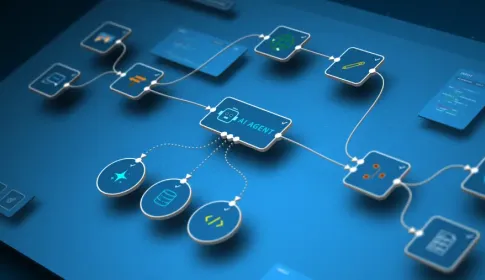
Three practical ways organizations can use AI-powered assistants, intelligent automation, and generative AI to improve productivity and accelerate business outcomes.

See how LABUSA built an enterprise-grade Drupal platform for LABUSA Travel, with CRM, payments, marketing automation, APIs, security, and cloud infrastructure.

Thinking about digitizing your business? Discover proven best practices for digital transformation to drive growth with smarter, more efficient solutions.

The role of today’s Chief Information Officer (CIO) goes far beyond overseeing IT operations. It is about driving measurable business growth. CIOs are expected to:
Is your business vulnerable to cyber threats? Forty-three percent of businesses have compliance gaps in cloud-based payment systems, making them prime targets for cyberattacks.

Choosing the right tech partner boosts efficiency, security & success. ISO 9001:2015 & 27001 ensure quality & robust security.

TX-RAMP (Texas Risk and Authorization Management Program) is a cybersecurity certification by the Texas DIR for cloud service providers handling state agency data. It ensures compliance with security standards like NIST 800-53.

Enterprise-grade cloud, cybersecurity & IT for government & SMBs. ISO certified, TX-RAMP compliant, AI-powered automation.

Transform workflows with LABUSA. Cloud, automation & collaboration tools with 24/7 support for productivity & efficiency.

Adopt a security-first approach with LABUSA. Mitigate cyber threats, ensure compliance & protect data with managed cybersecurity & cloud security solutions.
Boost ROI with automation, cloud & analytics. LABUSA provides managed IT, cybersecurity & infrastructure for business growth.

Cyber threats can cripple a business. Learn how IT risk management helps prevent data breaches and protect operations with advanced security measures.

Cut costs & boost IT security with vCIO services. LABUSA helps SMBs prevent issues, enhance security & drive growth.
In today’s fast-paced digital landscape, technology is no longer just a support function. It is a strategic driver of business growth. Organizations that align their technology investments with business goals can enhance operational efficiency, improve customer experiences, and maximize return on investment (ROI).

The rapid evolution of technology is reshaping industries, driving innovation, and redefining business operations.

USA, Friday, November 1, 2024. LABUSA will be participating as an exhibitor at the Africa Tech Festival 2024, taking place from November 12-14 at the Cape Town International Convention Centre. LABUSA will be showcasing its cutting-edge IT infrastructure, cloud solutions, and managed services.
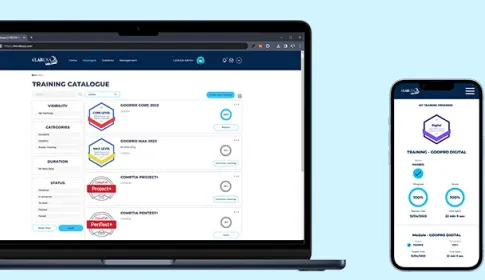
LABUSA, a managed service provider, launches its new Learning Management System (LMS) to address the expanding cybersecurity risks of remote workers.

Visit LABUSA at Intersec Dubai, Hall 1 Booth 1-G31. Showcasing hybrid cloud, cybersecurity & managed IT solutions for security professionals.

Viewing cybersecurity as strategies and tactics means taking a comprehensive approach rather than relying solely on products and services. Open configuration options allow for customizable security systems that can be tailored to specific needs.